Dimraeth Quests Guide — Main Story, Deeds and Bounties
How Dimraeth quests work in Early Access: the main story route through Earlwood and Wildwood, repeatable Deeds and Bounties, dynamic events, and personal quests.
Last checked: 2026-09-17 · Facts on this page come from the sources listed above; anything unverified is marked as unconfirmed. Early Access details can change with each official patch.
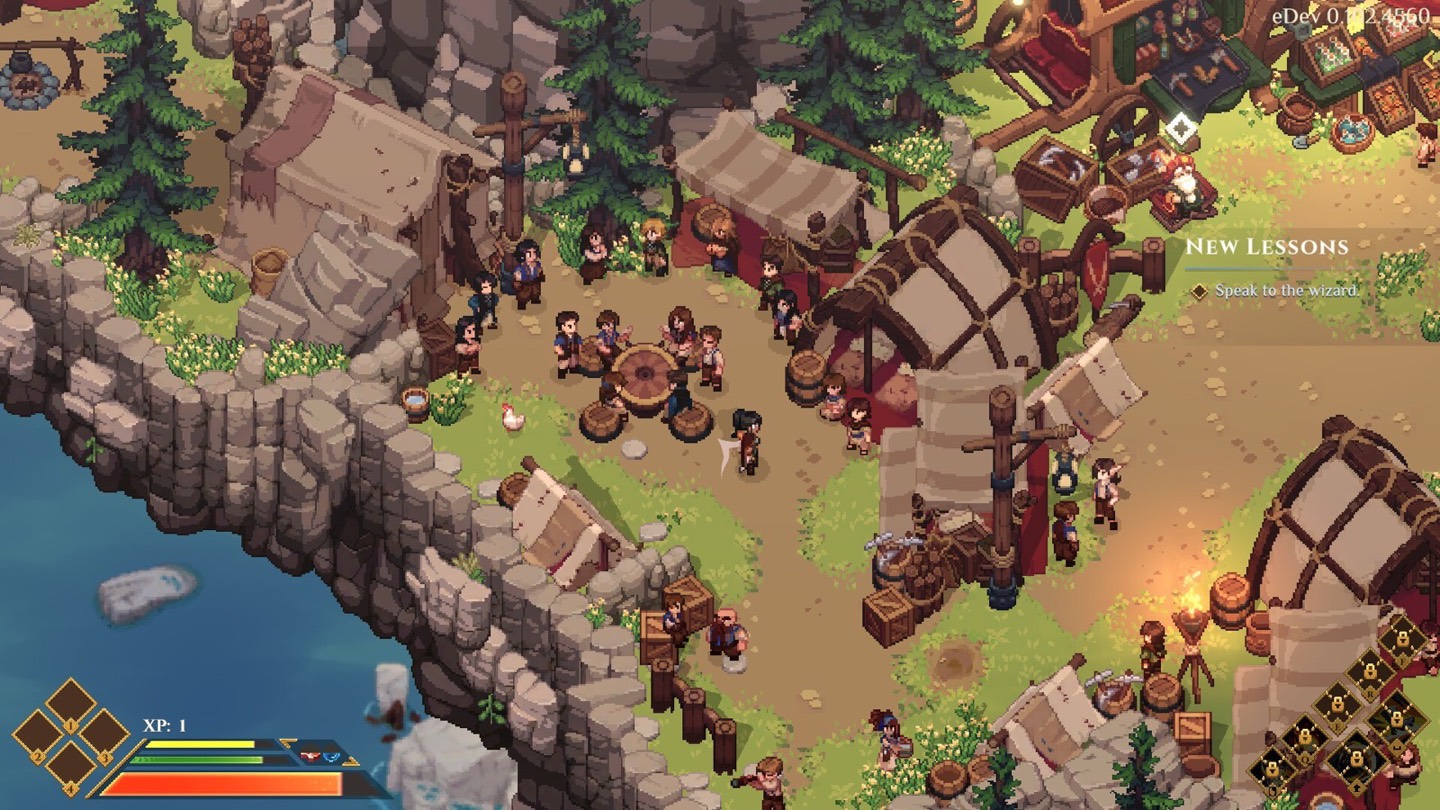
Dimraeth quests come in four flavors, and knowing which is which saves hours: the main story campaign that pushes you from Earlwood into Wildwood, short repeatable Deeds picked up from boards in town, repeatable boss Bounties for farming gear and materials, and timed dynamic events that pop up while you explore. On top of those, the official Steam description confirms that deeper relationships with allies unlock personal quests, which ties the social layer directly into the quest log. The quest journal in Early Access looks crowded because all of these run simultaneously, but only the main story controls access to new regions. This guide explains each type, the order to prioritize them, and how XP ties the whole loop together.
The main story route
The current campaign follows a clear spine even when the journal looks messy. Community walkthroughs report the sequence runs from the opening Lost Caverns tutorial through Earlwood Village objectives, then north into an expanded Wildwood: locating a lost child and the Northern Crossing, working through the goblin storyline and its hideout, defeating the Goblin King, opening the throne path, and finally pushing down the Forest Path to the Forest King, named Aelwynor the Wildroot Father in player guides. Beating a story boss does not always end a region — the forest storyline continues after the Goblin King falls — so when a gate refuses to move, the fix is almost always the next named story objective rather than more side content. Our Wildwood guide walks that region step by step.
Deeds: the repeatable backbone
Deeds are short jobs taken from the Guild Hall board in Earlwood — scouting a road, thinning out a field, clearing a camp — and community guides report they are the most reliable XP in the game because enemy kills alone pay poorly early on. The habit experienced players recommend is grabbing a stack of Deeds before every expedition and completing whichever ones sit along your route. Deeds also scale: community sources describe Deed Levels that raise both difficulty and rewards, up to a reported ceiling around level ten, which turns Deeds into the primary endgame difficulty ladder after the story runs out. Because story progress is world-tied in co-op, do your Deeds in the world your group actually intends to keep developing.
Bounties: farming the bosses you beat
Once you defeat a boss, it becomes available as a repeatable Bounty from the same Guild Hall board, according to community guides. That matters for two reasons. First, specific gear sets and materials are tied to specific encounters, so Bounties are the targeted way to farm set pieces instead of hoping a random drop appears. Second, community players report that boss drops feed directly into skill recipes, letting you craft multiple spells from one boss's materials instead of being locked out by a single choice. Each time you clear a Bounty at the highest difficulty available, you can raise the notch for better rewards, which makes Bounties the natural bridge into the endgame loop.
Dynamic events and personal quests
While exploring you will see on-screen notifications for dynamic events — rescue scenarios, monster sieges, caravan ambushes — that community guides report last around fifteen real minutes and persist through resting. They pay a solid chunk of XP relative to their effort and some have multiple stages with elites or mini-bosses, so they are usually worth the detour. Separately, the relationship system feeds the quest log: official material confirms that deeper relationships unlock new conversations and personal quests, and early players report that talking to every named NPC in Earlwood at least once per story chapter surfaces dialogue easily missed if you only chase markers. See our NPC guide for who is who around the village.
XP, leveling, and spending wisely
XP in Dimraeth pools as a currency you spend at campfires and trainers to raise attributes, and the total you spend also fills your character level, which grants skill tree points. The current level cap is 25, and Mudtek has said it will rise with future acts. Community guides note that regular enemies pay very little — often under ten XP — while quests, events, Deeds, and Bounties pay the meaningful amounts, which is why the recommended loop is: take Deeds, follow the story, grab events on the way, and return to town to train. Death does not cost you banked XP according to early players, though enemies respawn, so experimenting is cheap. For what to raise first, see the beginner guide and our level cap breakdown. The full quest cluster lives in the world and quests hub.
FAQ
What types of quests are in Dimraeth?
Official material confirms story quests and ally recruitment, and community guides document the rest of the mix: short repeatable Deeds from the Guild Hall board, repeatable boss Bounties, timed dynamic events in the field, and personal quests unlocked through NPC relationships.
How long is the Dimraeth main story in Early Access?
Community guides report the current campaign runs roughly 12 to 15 hours, ending at the Forest King in Wildwood. Mudtek has said additional acts are planned during the 18-24 month Early Access window, so the story is unfinished by design.
Do quests respawn or repeat?
Deeds and Bounties repeat from the Guild Hall board, dynamic events respawn as you explore, and regular enemies repopulate when you rest at a campfire. Main story quests do not repeat once completed.
Official sources
Related guides
Browse all →Dimraeth Best Pets — Which Companion Fits Your Build
The best Dimraeth pets by build: Moon Cat for casters, Carrion Parrot for bleed melee, Ember Hound for fire, Fangra Cub as the all-rounder, plus defensive options.
Dimraeth Bosses Guide — Every Named Boss in Early Access
Every Dimraeth boss reported so far: the Goblin King, Aelwynor the Wildroot Father, demo-era fights, and how Bounty reruns and Deed levels scale the difficulty.
Dimraeth Endgame Guide — What To Do After the Forest King
The Dimraeth endgame explained: what happens after the current story ends, Deed Level boss farming, build refinement, pets, sanctum work, and what Early Access adds next.
Dimraeth Goblin Caves Guide — the New Early Access Region
Everything reported about the Dimraeth Goblin Caves: the new Early Access region from Mudtek's September notes, goblin enemies, the expected major boss, and prep tips.
Dimraeth Map Guide — Every Named Region in Mirkea
The Dimraeth map explained: confirmed regions from the Lost Caverns to Wildwood Forest and Goblin Caves, how map reveal works, and what stays unconfirmed in Early Access.
Dimraeth NPC Guide — Characters, Lore & Relationships
Every named Dimraeth NPC — Befr, Manga, Eldorian, Tamsin, Myrll and Alaric Audet — with their official lore, plus how relationships and recruiting allies work.