Dimraeth Recipes: How to Unlock Every Crafting Recipe
Dimraeth recipes are discovered, not listed: material hints, enemy-dropped scrolls, and trainer spell books. Here is every confirmed way to unlock recipes.
Last checked: 2026-09-17 · Facts on this page come from the sources listed above; anything unverified is marked as unconfirmed. Early Access details can change with each official patch.
Dimraeth recipes are not handed to you on a list: the game deliberately hides most formulas and expects you to discover them through material hints, enemy-dropped scrolls, and spell book crafting at trainers. Community reviewers consistently call this one of the game's defining traits — unlike most base-building games, Dimraeth rarely tells you exactly how to make a craftable item, and figuring it out is part of the progression. This page explains every confirmed route to new recipes, what the community wiki documents about the recipe pool, and how to discover recipes faster without wasting materials.
How recipes work in Dimraeth
Crafting in Dimraeth runs through four station categories — cooking, the crafting bench, the alchemy table, and personal crafting — and each recipe tells the station to convert specific materials into a finished item. What makes the system unusual is the discovery layer. When you hover over a reagent or material, many tooltips include a segment saying the ingredient is "used to craft" a particular item or two. Community players stress that this is a hint, not a full recipe: it names some things an ingredient can make, but rarely everything.
That design means your recipe list grows in two ways at once. Formally, a recipe becomes available once you have unlocked it through a scroll or a quest. Informally, you can often reproduce items you have not formally unlocked by experimenting at the station, combining materials whose tooltips point in the same direction. One community reviewer noted discovering water and nature spells through the crafting system while playing a fire mage — spells that character could not have learned anywhere else.
Discovery is also forgiving in one important way: nothing you craft can be wasted on a mistake that locks you out of anything. Recipes you unlock stay unlocked, scrolls convert directly into permanent knowledge, and spell books wait in your inventory until consumed. Community players who worried about "wrong" crafting choices early on consistently report the opposite — the system is built so experimentation compounds rather than punishes.
How many recipes are in Dimraeth
The community wiki currently documents 48 base recipes across the four crafting categories, excluding upgrade tiers: Cooking with 8 recipes, Crafting Bench with 9, Alchemy Table with 10, and Personal Crafting with 21. Keep in mind that this documentation was assembled while the wiki still covered the demo, so the Early Access totals may differ — treat the breakdown as a map of where recipes live rather than a confirmed count.
The practical takeaway from those numbers is where to look. Cooking and alchemy together account for a large share of recipes, which matches how central food, water, and potions are to the survival loop. Personal crafting is the biggest single bucket, covering the long tail of tools, furniture, and utility items. If a recipe you want is not at the bench or the alchemy table, check the personal crafting menu before assuming it does not exist.
Recipe scrolls: the reliable unlock route
For players who would rather not experiment, community guides describe a deterministic option: scrolls. Scrolls drop from different enemies out in the world and can also be bought from item shops, and using one unlocks the recipe for a craftable item directly. This is the game's answer to players who find pure discovery tedious, and it means no recipe is permanently locked behind guesswork.
The scroll system also interacts nicely with exploration. Because scrolls drop from enemies you are already fighting, aggressive play passively widens your recipe pool. Community players recommend using scrolls the moment you pick them up rather than stockpiling them — an unlocked recipe costs nothing to keep, and knowing what you can craft changes which materials you choose to hoard.
Spell book recipes at the trainers
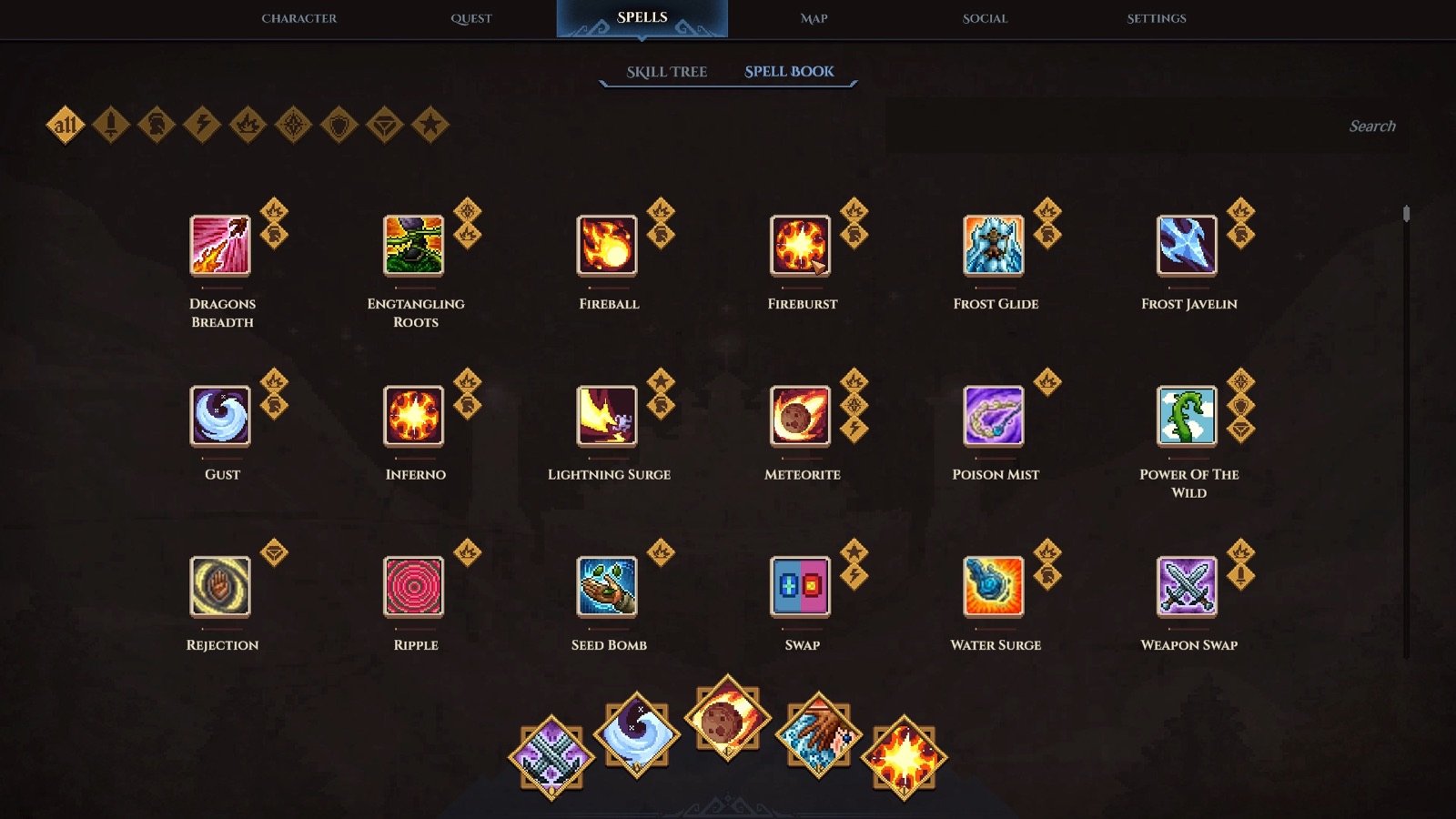
Skills and spells follow a parallel recipe path built around spell books. Community guides report that the glowing spell books you find at set points of interest in the world immediately unlock skill recipes for you to craft at the relevant Guild Hall trainer. Once crafted, you use the spell book from your inventory to permanently add the skill to your character — it is a consumable unlock, not an equippable item.
Trainers matter here because recipes are tiered by discipline: community players point to different trainers handling melee skills and magic spells, so the same found spell book sends you to different workbenches. The reported flow is consistent — find the book, craft it at the trainer, consume it, and the skill is yours for good. If you are unsure whether a skill suits your build, the crafted book waits in your inventory until you decide.
If a trainer does not immediately show the recipe you expected, community players recommend exhausting the trainer's dialogue and checking quest state first — some training flows gate access until a small step is completed. The spell book itself also lists its requirements, so a book that cannot be crafted yet is usually waiting on materials or progression rather than being broken.
Boss drops and skill recipes
Bosses feed the recipe system too. Community guides report that drops from defeated bosses are used in specific skill recipes, which means you can craft those skills from bounty re-runs instead of being gated to a single drop. Once a boss is defeated it becomes a repeatable bounty from the Guild Hall quest board, and raising the deed level on those bounties improves the rewards, including the materials that feed upgrades and crafting.
This design removes the classic fear of wasting a rare drop on the wrong choice. Because boss-tied recipes can be re-farmed through bounties, community players recommend crafting eagerly rather than hoarding drops — the game is explicitly built so that experimentation is cheap and recovery is always one bounty run away. Our farming guide covers the bounty loop in more depth.
How to discover recipes faster
A few habits compress the discovery phase considerably. First, read every material tooltip once — the "used to craft" hints are the game telling you where to aim your experiments. Second, craft at the station rather than from menus in the field, because the station interface is where partial recipes resolve. Third, keep one storage chest near your crafting stations and sort materials by type, so an experiment never fails just because an ingredient was buried in your bags.
Fourth, spend scrolls immediately and treat trainer spell books as priority crafts, since both convert directly into permanent unlocks. Fifth, check the in-game codex after discovering anything new — community players highlight that the codex documents sets, terms, and craftable items once you have encountered them, which turns accidental discoveries into a searchable record. Follow those five habits and most of the recipe tree resolves itself within your first day of play.
Related guides
FAQ
How many recipes are in Dimraeth?
The community wiki counts 48 base recipes across four crafting categories — Cooking (8), Crafting Bench (9), Alchemy Table (10), and Personal Crafting (21) — excluding upgrade tiers. That documentation was written around the demo, so the Early Access total is not yet confirmed.
How do you unlock new recipes in Dimraeth?
Community players describe three routes: reading the 'used to craft' hints on material tooltips and experimenting at stations, using scrolls that drop from enemies or are sold in shops to unlock recipes outright, and crafting spell books at Guild Hall trainers to learn skills.
Can you craft spell books in Dimraeth?
Yes. Community guides report that spell books you find in the world unlock skill recipes at the relevant trainer, and that boss drops feed into specific skill recipes, so most skills can be crafted rather than permanently missed.
Official sources
Related guides
Browse all →Dimraeth Armor Guide — Sets, Set Bonuses & Smithy Upgrades
Dimraeth armor explained: set bonuses you can mix across sets, smithy upgrades that add stats, salvage at the forge, and how to farm the pieces you want.
Dimraeth Crafting Guide — Stations, Recipes & Materials
How crafting works in Dimraeth: every crafting station, what each one makes, recipe discovery, and the sanctum workbench loop, checked against Early Access.
Dimraeth Equipment Guide — Gear Slots, Tiers & Set Bonuses
Dimraeth equipment explained: gear slots and quality tiers, affixes and set pieces that reshape spells, plus salvage, upgrades, and where good drops come from.
Dimraeth Spells Guide — Schools, Spell Books & Requirements
How spells work in Dimraeth: the planned 300+ spell scope, the schools documented so far, spell books and stat requirements, and every way to learn new magic.
Dimraeth Weapons Guide: Race-Locked Arms & Upgrades
Weapons in Dimraeth are race-locked: your race picks the weapon and your class adds spells. What community guides report about arms, skills, and upgrades.