Dimraeth Multiplayer: How 8-Player Online Co-op Works
Dimraeth multiplayer explained: 1-8 player seamless online co-op, solo play, peer-to-peer hosting with no dedicated servers, and which features are unconfirmed.
Last checked: 2026-09-17
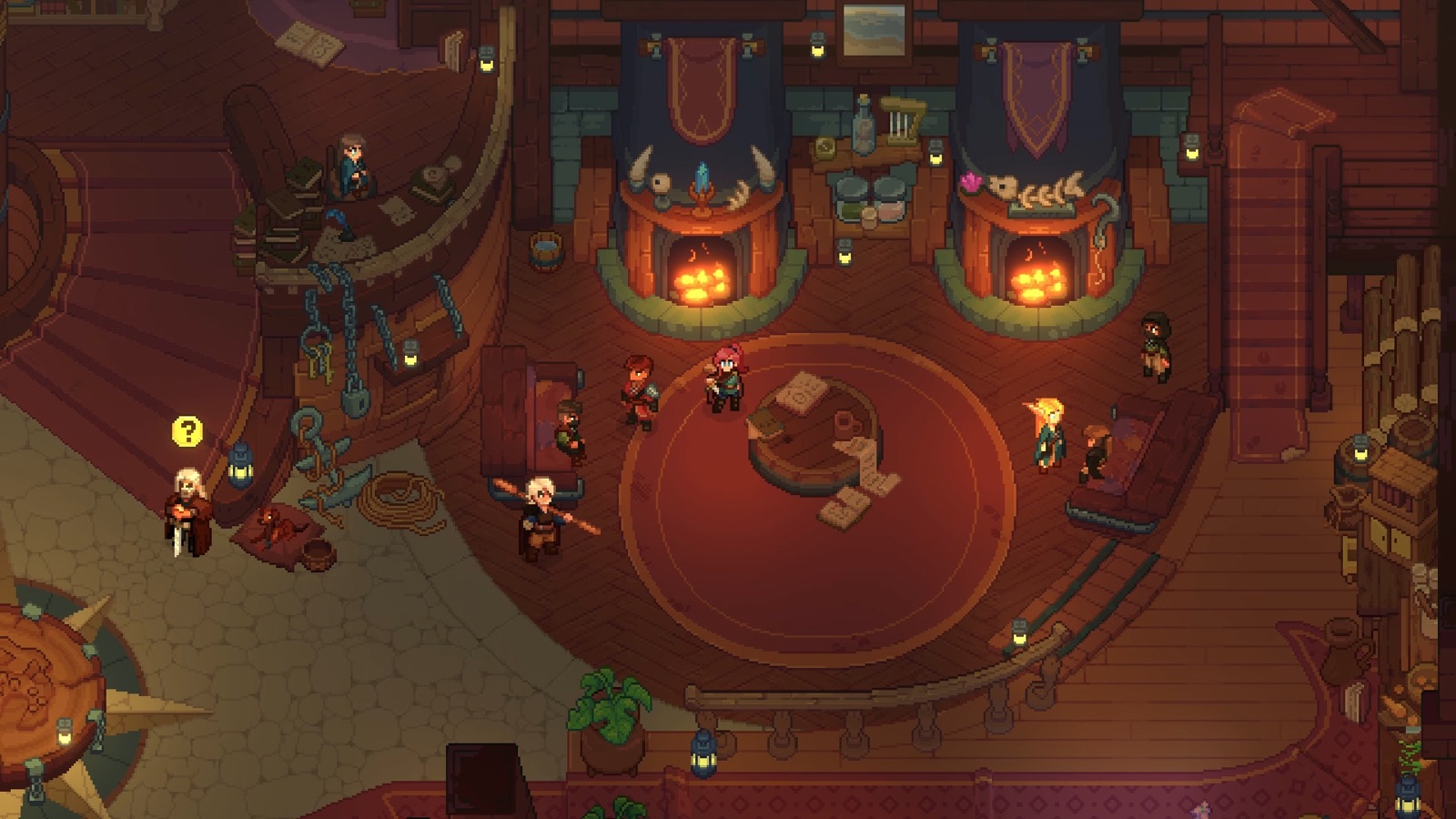
Dimraeth multiplayer is online co-op for one to eight players in a shared world, with solo play fully supported. Official sources describe it as seamless drop-in/drop-out co-op: friends can join or leave your session without forcing anyone to restart, and you can play the entire game alone if you prefer. There is no subscription, no separate multiplayer mode to unlock, and no matchmaker to fight through — you either open your world to others or keep it to yourself. Below is exactly how the co-op is set up, what the official materials confirm about networking, and which multiplayer features are still unconfirmed as of the Early Access launch on September 15, 2026.
How many players does Dimraeth support?
The official website and Steam page both market Dimraeth as a 1-8 player fantasy RPG, meaning a full party is one hero plus up to seven guests. Steam's listing also flags in-game chat and online interactivity, so talking to your party is built in rather than bolted on. Community players who joined pre-launch playtests report that difficulty scales with party size, so a group of eight should expect enemies tuned for a full squad rather than a trivially easy romp — treat that as an early-player observation, not an official spec. Solo play is not a watered-down afterthought either: the entire campaign, crafting loop, and base building work single-player, and several early reviewers actually finished their first hours alone before grouping up.
How drop-in/drop-out co-op works
The Steam page is explicit: "Play alone or in seamless drop-in/drop-out co-op for up to eight players." In practice, one player owns the world and others join that host's session, with host settings deciding who can enter — a structure early players compare to Terraria or Enshrouded. The key rule Mudtek states officially is how progress splits: your hero's level, equipment, inventory, spells, and personal progression travel between worlds, while story progress, recruited allies, and buildings stay tied to each individual world. That means you can keep one character and hop between friends' saves without losing your build, but the town you upgraded lives in your world, not theirs. Community reviewers also highlight two quality-of-life details: by default each player gets their own loot drops, so nobody is fighting over gear, and guests are free to split off and explore different corners of the map instead of leash-following the host.
Networking: peer-to-peer, no dedicated servers
Dimraeth's official Early Access FAQ describes the game as using peer-to-peer networking, and there are currently no dedicated or privately rentable servers. In plain terms, one player's machine acts as the session host while co-op is active, and connection quality depends on that player's internet rather than a data center. The Steam page lists only a broadband connection under network requirements, and there is no server browser or server rental option to configure. For most small groups this is a non-issue, but it is worth knowing before you plan an eight-player session: if the host leaves, the session ends for everyone in that world, and features like automatic host migration have not been announced. If Mudtek adds server options later, it will likely show up in the Early Access roadmap.
Playing Dimraeth solo
Solo is a first-class way to play, not a fallback. You create your hero, pick a race and class combination, and experience the same open world, quests, deeds, and boss fights that groups do. Community players who have done both note the game feels meaningfully harder alone — one co-op-focused YouTuber described open-world encounters as "dangerous" solo and far more manageable with friends, partly because teammates can revive you when you go down. That revive mechanic has no harsh penalty attached according to early reviewers, just a revive timer you have to time during a fight. Playing solo simply means no one is there to pick you up, so flask charges, campfire rests, and careful stamina management matter more. If you start solo and later want company, you can open your existing world to friends without starting over.
What co-op sessions actually look like
Because Early Access launched on September 15, 2026, long-term impressions are still forming, but the pre-launch playtests and first streamers give a consistent picture. Co-op was already playable well before Early Access — community creators ran multi-player playtest sessions with four or five people and reported the game got harder and demanded actual teamwork. In normal sessions, players describe using way stones to teleport across the map, splitting up to run different quests, then regrouping instantly for a boss or a timed world event. Everyone keeps their own character build, so parties naturally mix tanky frontliners like a minotaur brawler with ranged or spell-casting archetypes. The overall shape is closer to a persistent shared sandbox than a lobby-based mission picker, which is why early players keep reaching for MMO comparisons even though it is a co-op-only game.
What is not confirmed yet
Several features people ask about are simply not confirmed as of September 17, 2026. Crossplay is not confirmed — Dimraeth is a Steam Early Access title and console versions have not been announced at all. There is no dedicated server support or server browser right now, and no "friend pass" style free guest copy has been mentioned by Mudtek. Host migration, LAN play, and couch co-op or split-screen have not appeared in any official material either. None of these are confirmed noes forever — Early Access is planned to run roughly 18 to 24 months — but buying on the promise of any of them would be a mistake until Mudtek states it directly. The official Steam page, website, and Discord are the reliable places to watch for announcements.
Tips for your first co-op session
A little preparation makes an eight-player evening go smoothly. First, agree on who hosts: that player's world holds the story progress and buildings, so it should be whoever plans to play the most. Second, build a complementary party — one or two durable brawlers up front, plus ranged and caster archetypes behind them, covers most encounters well. Third, remember that loot is per-player by default, so let everyone grab their own drops and skip the negotiation. Fourth, unlock way stones as you explore; early players consistently say fast travel is what keeps a scattered group together. Finally, if someone goes down, anyone can attempt the revive — just wait for a gap in the boss's telegraphed attacks. For the wider systems that co-op sits on top of, the gameplay overview and the beginner guide are the best next reads.
Related pages
- Gameplay overview — how quests, deeds, hunger, and the day cycle work in a shared world.
- Classes and races — every race and class combination you can bring to a party.
- Beginner guide — the first hours, solo or in a group.
- Early Access status — what launched, what is planned, and how long EA is expected to run.
In this section
Guides for this section are being prepared.
FAQ
How many players can play Dimraeth together?
Up to eight players in one online session. The official Steam page describes Dimraeth as a seamless drop-in/drop-out co-op RPG for one to eight players, and the game is also fully playable solo.
Does Dimraeth have dedicated servers?
No. Mudtek's official Early Access FAQ describes peer-to-peer networking, and there are currently no dedicated or privately rentable servers. Sessions are hosted by players themselves.
Can you play Dimraeth solo?
Yes. Every system — quests, crafting, base building, and bosses — works in single-player. Community players do report that some fights feel noticeably tougher alone, since co-op partners can revive downed teammates.